Filter or strainer element
State outside diameter, inside clearance, active length, slot, flow direction, differential pressure basis and cleaning method.
KUNYU GROUPWedge Wire Screen Team
CUSTOM INDUSTRIAL SCREEN COMPONENTS
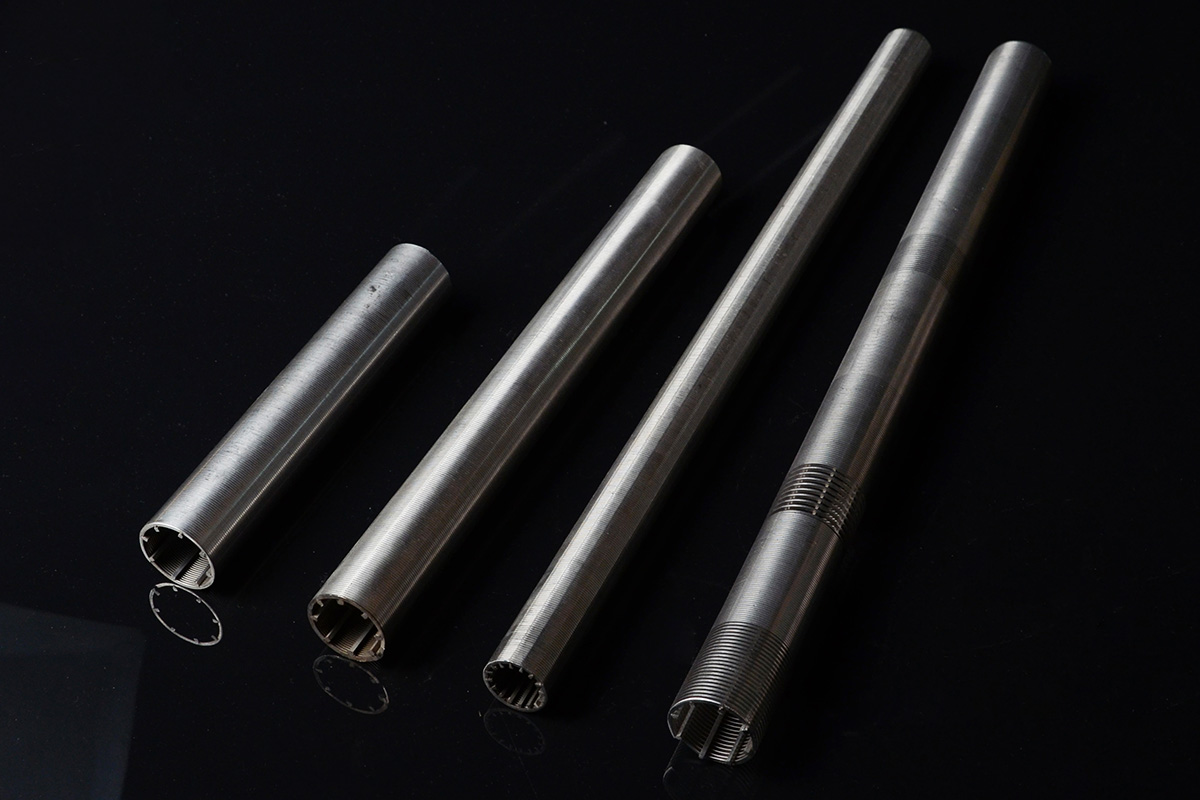
A wedge wire cylinder is a tubular screen element with a slotted profile-wire surface and structural supports. It provides a cylindrical screening area for filters and equipment; the screening face and construction must suit the intended flow direction.
Cylinders and tubes are used as screening elements in industrial filters, strainers and process assemblies. Replacing a tube requires more than matching its outside diameter: the connection, effective screen length, internal clearance and pressure direction also matter.
CONFIGURATION REFERENCE
The photographs below are third-party industry references that illustrate common cylinder, flange and end-connection arrangements. They are not Wedge Wire Works production or completed-project claims. Final construction must be confirmed from the buyer’s drawing and operating duty.
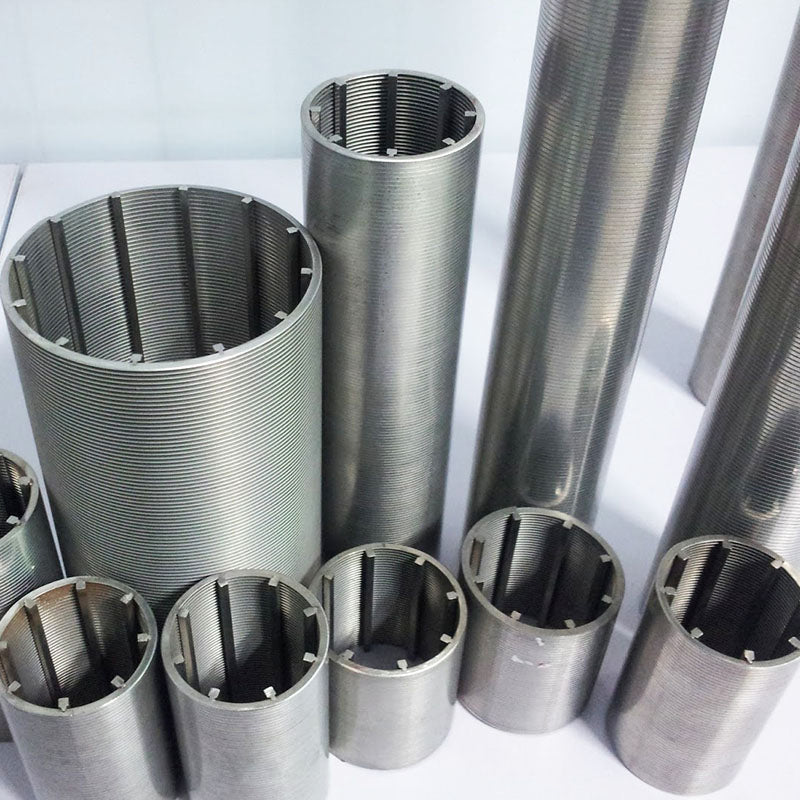
Diameter, overall length, active screen length and internal clearance should be separated clearly on the enquiry drawing.
Industry reference image: DATONG DOIEE.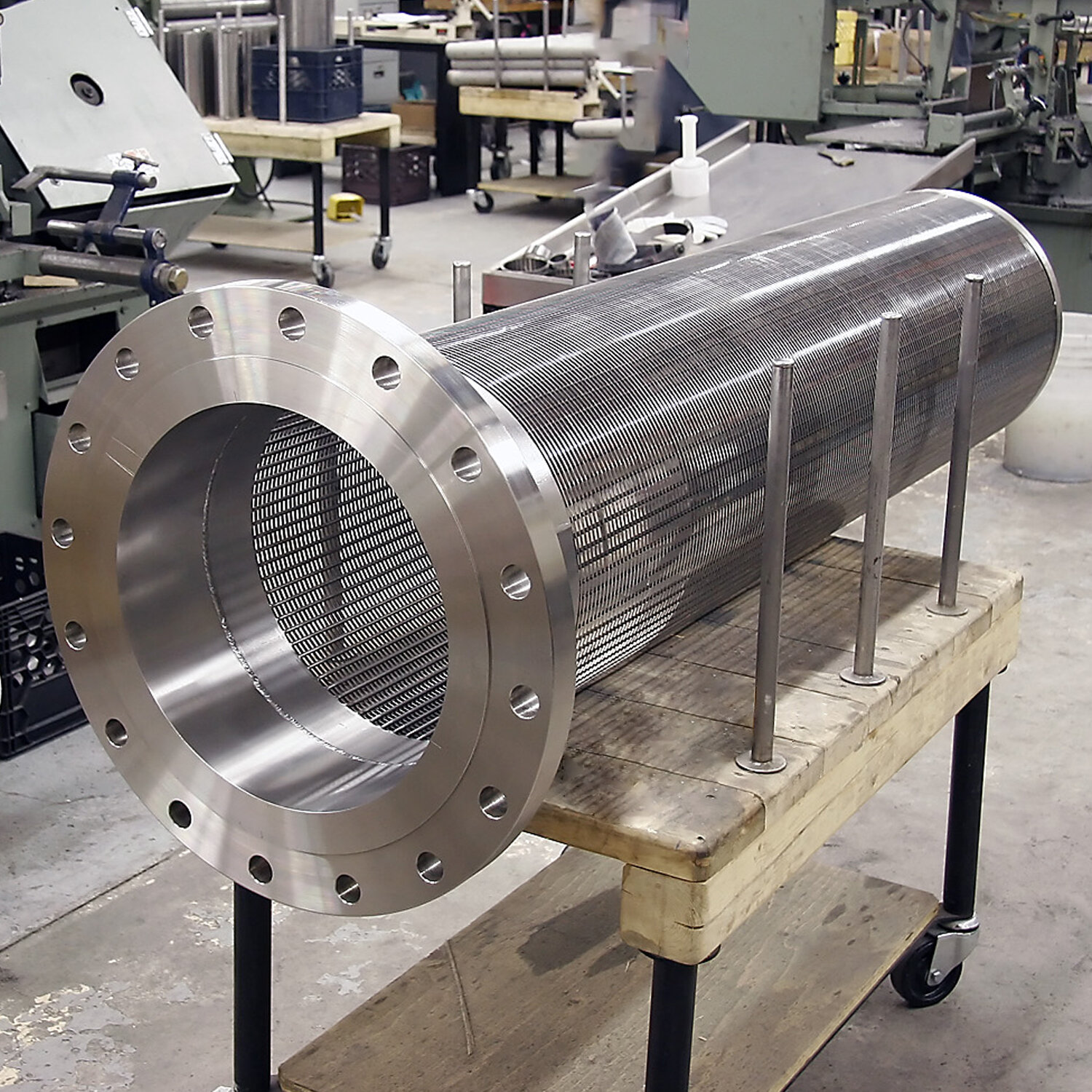
Flange drilling, register, sealing face, support rings and flow direction are critical replacement and equipment-interface details.
Industry reference image: Federal Screen Products.
Long elements require agreement on straightness, support arrangement, end finishing and which diameter controls equipment fit.
Industry reference image: YUBO.Use this checklist for an enquiry or drawing review. Dimensions and slot openings are specified for the project; the table is not a stock-size or guaranteed-capability range.
| Parameter | Information to provide | Why it matters |
|---|---|---|
| Cylinder dimensions | Outside diameter, inside clearance and overall length | Distinguish overall length from active screening length. |
| Flow direction | Outside-to-inside or inside-to-outside flow | Show the process flow arrow and the screening face on the drawing. |
| Slot and profile | Nominal slot in mm, tolerance and wire orientation | The same nominal slot does not define the same open area or strength. |
| End connections | Rings, flange details, threads or other drawing-defined ends | Include mating dimensions, sealing faces and attachment details. |
| Service conditions | Medium, temperature and normal / maximum differential pressure | Identify both operating and cleaning pressure directions. |
These are illustrative enquiry profiles, not completed-project claims. They clarify the information needed to review a cylinder or tube.
State outside diameter, inside clearance, active length, slot, flow direction, differential pressure basis and cleaning method.
Provide flange standard or drawing, bolt circle, sealing face, orientation, support rings and critical fit tolerances.
Send the old-part drawing, photographs, end details, wear or distortion problem, equipment reference, quantity and destination.
Identify the characteristics that decide whether the screen is acceptable for your equipment:
Ask for the required inspection records, sampling basis and material documentation in the quotation. Availability and scope need to be confirmed for the order. Review the documentation checklist.
Send the drawing revision, quantity and delivery destination. For a replacement, include installation photos, the equipment reference and any wear or fit problems.
Material grade, tolerances, minimum order quantity, packing, lead time and delivery terms are agreed in the quotation. A similar-looking product photograph is not a compatibility confirmation.
Overall length includes the complete component and its end fittings. Active screen length describes the slotted area that contributes to screening. Provide both when the assembly has solid end rings or connectors.
Do not assume a cylinder is interchangeable between flow directions. Identify outside-to-inside or inside-to-outside service so the screening face, supports and loading can be reviewed for that duty.
Check for blocked or worn slots, damaged profile wires, supports and end connections. Confirm the approved cleaning method, direction and pressure for the installed element; do not assume reverse flow is safe. Use the maintenance checklist to record findings before requesting a replacement.
Send outside diameter, inside clearance, overall and active length, slot, flow direction, material, end connections, operating duty, quantity and destination. Unknown items can remain open for drawing review.
Email eric@kunyufencing.com or continue on WhatsApp. Attach drawings in your chosen app.