Mineral dewatering
Provide feed rate, solids concentration, particle distribution, slurry characteristics, required cut or recovery objective and wear conditions.
KUNYU GROUPWedge Wire Screen Team
CUSTOM INDUSTRIAL SCREEN COMPONENTS
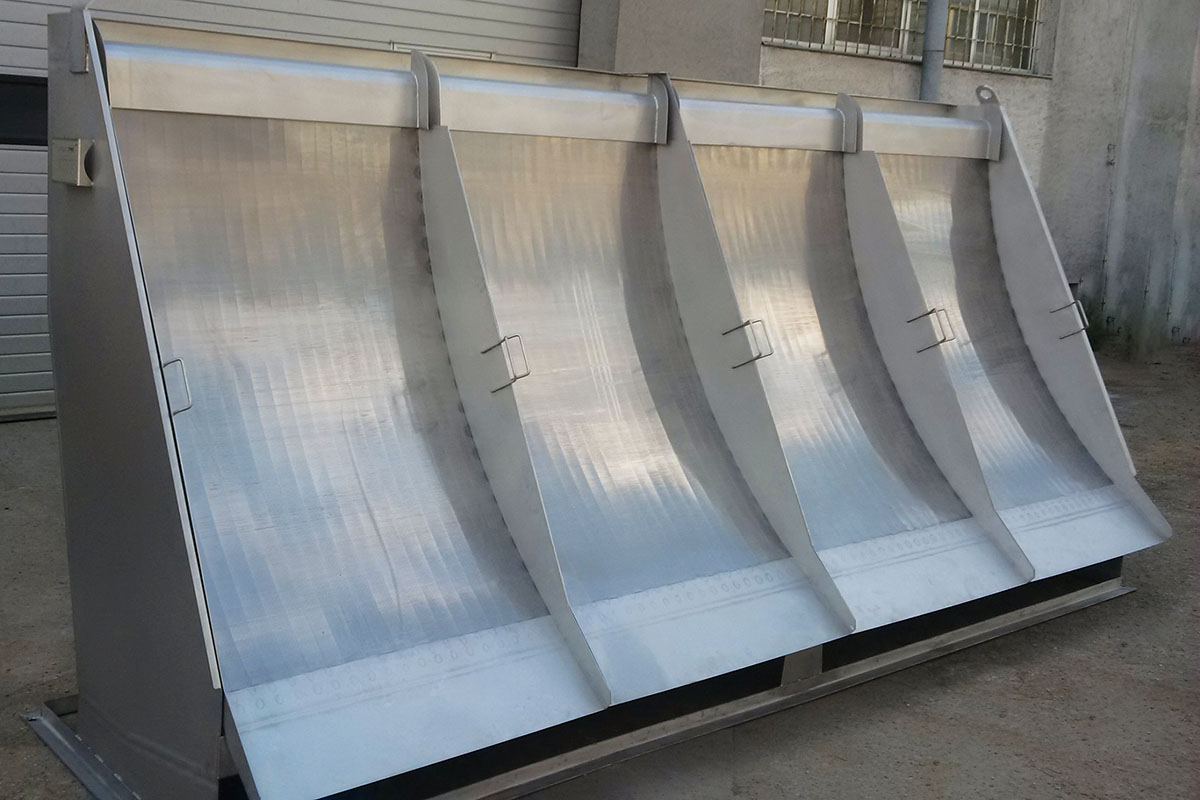
A sieve bend screen is a curved wedge wire surface used for solid-liquid separation. Feed travels over the curved screening face; part of the liquid and sufficiently small material passes through the slots while retained material continues over the surface.
Sieve bends are used in dewatering and recovery duties, including mineral processing and food-process separation. Selection needs the feed conditions as well as the screen geometry. Solids loading, particle shape and the way feed reaches the surface influence the result.
CONFIGURATION REFERENCE
The photographs below are third-party industry references that illustrate curved panels, dimensional control and static screening use. They are not Wedge Wire Works production or completed-project claims. Final radius, arc, slot orientation, framing and feed conditions must be confirmed for the project.
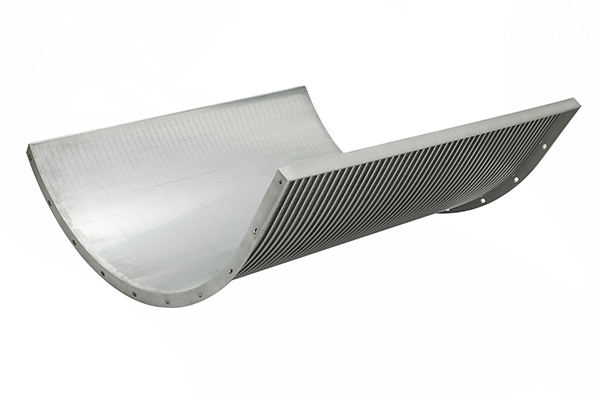
Screen width, radius, arc angle, flow direction and slot orientation define the basic curved screening geometry.
Industry reference image: Johnson Wedge Wire.
A drawing should distinguish chord, arc length, included angle, radius, frame allowance and active screening area.
Industry reference image: YUBO.
Feed distribution, solids loading, particle shape, slurry concentration and discharge arrangement affect screen selection and performance.
Industry reference image: Wedge Wire Filter.Use this checklist for an enquiry or drawing review. Dimensions and slot openings are specified for the project; the table is not a stock-size or guaranteed-capability range.
| Parameter | Information to provide | Why it matters |
|---|---|---|
| Curved geometry | Screen width, radius and included arc angle | State whether length means arc length or a straight-line measurement. |
| Slot and surface | Nominal slot, tolerance and profile wire orientation | Mark feed direction and the working face on the drawing. |
| Feed conditions | Flow rate, solids concentration and particle description | Include how feed is distributed across the width. |
| Mounting | Side plates, edge bars, frame and attachment points | Show the screen seat and any adjustment or removal space. |
| Service and cleaning | Medium, temperature, abrasion and cleaning method | Separate expected operating conditions from occasional extremes. |
These are illustrative enquiry profiles, not completed-project claims. They identify the process information required before a sieve bend can be reviewed.
Provide feed rate, solids concentration, particle distribution, slurry characteristics, required cut or recovery objective and wear conditions.
State product, temperature, cleaning regime, hygienic material requirements, slot, feed arrangement and target separation result.
Share hydraulic loading, suspended solids, fibre or debris type, screen width, radius, discharge route and cleaning expectations.
Identify the characteristics that decide whether the screen is acceptable for your equipment:
Ask for the required inspection records, sampling basis and material documentation in the quotation. Availability and scope need to be confirmed for the order. Review the documentation checklist.
Send the drawing revision, quantity and delivery destination. For a replacement, include installation photos, the equipment reference and any wear or fit problems.
Material grade, tolerances, minimum order quantity, packing, lead time and delivery terms are agreed in the quotation. A similar-looking product photograph is not a compatibility confirmation.
The physical slot opening is a screen dimension. Actual separation depends on the feed, particle shape, flow and screen arrangement. A slot value alone is not a guaranteed separation cut size.
Record width, radius, included angle or arc length, slot opening, side-plate details and mounting positions. Mark the feed direction and photograph the working surface and support side.
Send screen width, radius, arc angle, slot orientation, profile and support details, feed conditions, material, frame or mounting details, quantity and destination.
Email eric@kunyufencing.com or continue on WhatsApp. Attach drawings in your chosen app.